
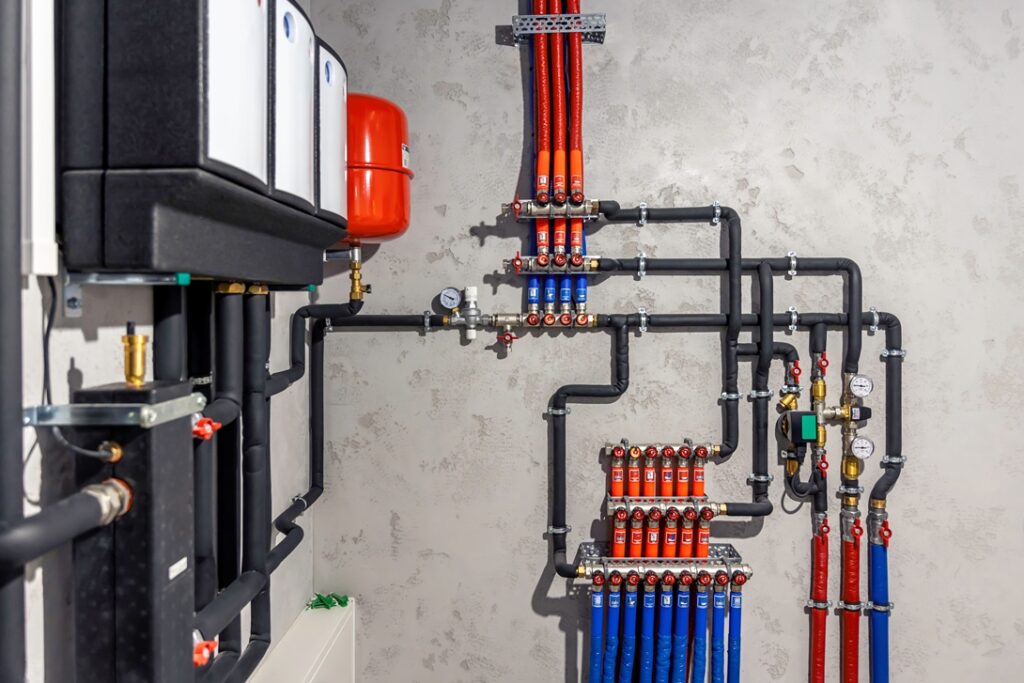
Nigeria’s construction industry continues to expand at an unprecedented pace, with large-scale projects reshaping the country’s infrastructure landscape.
For over three decades, Almog Engineering Limited has witnessed the evolution of Nigeria’s MEP landscape, from simple residential installations to complex high-rise projects across Lagos, Abuja, and beyond. Through our extensive experience in hospitals, commercial complexes, and industrial facilities, we’ve identified the critical success factors that separate exceptional MEP projects from costly failures. This comprehensive guide reveals the strategic approaches that define mastery in Nigerian MEP contracting, ensuring projects deliver exceptional performance while maintaining cost efficiency and regulatory compliance.
Mastering MEP Contracting: Comprehensive Pre-Project Planning and System Integration
The foundation of successful large-scale MEP projects lies not in the construction phase, but in the months of meticulous planning that precede it. Unlike smaller residential projects where MEP systems can be designed sequentially, large-scale developments demand integrated planning from the conceptual stage. This approach prevents the costly clashes and redesigns that plague poorly coordinated projects.
Effective MEP planning begins with understanding the building’s intended use, occupancy patterns, and operational requirements. A commercial office tower in Victoria Island has vastly different HVAC load calculations than an industrial facility in Kano, not just due to climate differences but also internal heat generation, occupancy density, and operational schedules. At Almog Engineering, our planning process includes detailed load calculations, system redundancy planning, and future expansion considerations.
Advanced 3D modeling and Building Information Modeling (BIM) technology have revolutionized coordination processes, allowing teams to identify and resolve conflicts in the virtual environment before they become expensive problems on-site. This integration ensures mechanical ductwork coordinates seamlessly with electrical conduit routing and plumbing installations.
Strategic Equipment Procurement and Supply Chain Management
Nigeria’s unique market conditions create both opportunities and challenges for MEP equipment procurement. While the country offers access to global suppliers and manufacturers, factors such as foreign exchange fluctuations, import regulations, and extended lead times require sophisticated procurement strategies that many contractors overlook.
Smart procurement begins with understanding the total cost of ownership, not just the initial purchase price. A lower-cost HVAC unit that lacks local service support or readily available spare parts may prove far more expensive over its operational lifetime than a premium system with established local representation. Almog Engineering maintains strategic partnerships with leading equipment manufacturers and local distributors, ensuring competitive pricing and reliable warranties.
The timing of procurement decisions is equally critical. Major equipment items like chillers, generators, and specialized pumps often have 12-16 week lead times, requiring early specification and ordering to avoid project delays. Quality assurance throughout the supply chain includes factory acceptance testing, proper transportation procedures, and comprehensive receiving inspections that protect against equipment failures and warranty disputes.
Advanced Project Coordination and Construction Management
Large-scale MEP projects involve dozens of specialized trades working in confined spaces under tight schedules. Without sophisticated coordination systems, these projects quickly devolve into chaos, with trades interfering with each other, rework becoming commonplace, and project timelines extending indefinitely.
Modern MEP construction management relies heavily on technology to maintain coordination and communication. Real-time project management platforms allow superintendents to track progress, identify bottlenecks, and coordinate resources across multiple trades and project phases. Digital tools enable precise scheduling of sequential activities, electrical rough-in must precede certain mechanical installations, which must be completed before architectural finishes can proceed.
The human element remains equally important. Experienced MEP project managers understand the interdependencies between different trades and can anticipate potential conflicts before they occur. At Almog Engineering, our quality control protocols have evolved over 30 years of project experience, incorporating lessons learned from hundreds of successful installations across Nigeria’s diverse construction landscape.
Regulatory Compliance and Code Navigation
Nigeria’s regulatory environment for MEP systems involves multiple levels of oversight, from federal safety standards to local building codes and utility requirements. Navigating this complex landscape requires deep expertise and ongoing attention to regulatory updates and changes that impact project design and execution.
Building codes governing MEP installations vary significantly between states and municipalities, with Lagos, Abuja, and Port Harcourt each maintaining distinct requirements. What complicates matters further is that many regulations reference international standards like British Standards or American codes, requiring contractors to understand both local adaptations and underlying international requirements.
Fire protection systems present particularly complex regulatory challenges, especially in high-rise buildings and sensitive facilities like hospitals or data centers. Nigerian fire safety codes have evolved significantly in recent years, often requiring more sophisticated detection and suppression systems than previously mandated. Environmental regulations also impact MEP design, particularly regarding refrigerant use, energy efficiency standards, and waste disposal procedures. Staying current with these changes requires specialized expertise and strong relationships with regulatory authorities.
Technology Integration and Smart Building Systems
The convergence of traditional MEP systems with advanced technology platforms is reshaping how buildings operate and deliver value to their occupants. Modern large-scale projects increasingly incorporate building management systems, IoT sensors, and automated controls that optimize energy use, enhance comfort, and reduce operational costs.
Building Management Systems (BMS) represent the nerve center of modern MEP installations, integrating HVAC, electrical, and plumbing systems into a unified control platform. These systems provide real-time monitoring, automated responses to changing conditions, and detailed performance analytics that enable proactive maintenance and optimization. However, successful BMS implementation requires careful system design, proper integration protocols, and comprehensive operator training.
Energy efficiency considerations drive many technology integration decisions. Smart lighting systems that adjust based on occupancy and natural light availability can reduce electrical consumption by 30-50%, while advanced HVAC controls can achieve similar savings. Cybersecurity has emerged as a critical consideration for smart building systems, requiring robust network security measures, regular software updates, and comprehensive staff training on security protocols.
Skilled Workforce Development and Project Execution
The shortage of skilled MEP technicians and engineers represents one of the most significant challenges facing Nigeria’s construction industry. Large-scale projects require teams of highly trained professionals who understand complex systems, safety procedures, and quality standards, yet such expertise remains scarce in the local market.
Almog Engineering’s approach to workforce development combines formal training programs with hands-on mentorship and continuous professional development. Our senior technicians and engineers work closely with newer team members, transferring knowledge and building capabilities that serve both individual career growth and project success. This investment in human capital has proven essential for maintaining quality standards.
Safety training deserves particular emphasis in MEP work, where technicians regularly work with electrical systems, pressurized piping, and complex machinery. Comprehensive safety programs reduce accident rates, protect workers and property, and demonstrate professionalism to clients and regulatory authorities. Continuous learning remains essential as MEP technology evolves, requiring ongoing education through professional development programs, manufacturer training courses, and industry certifications.
Performance Optimization and Long-Term Value Creation
MEP systems are designed to operate for decades, making long-term performance optimization just as important as initial installation quality. Large-scale projects particularly benefit from systematic approaches to commissioning, performance monitoring, and preventive maintenance that maximize system life and operational efficiency.
Commissioning represents the critical transition from construction to operation, involving comprehensive testing and fine-tuning of all MEP systems. Proper commissioning ensures that systems operate as designed, meet performance specifications, and provide the comfort and functionality that building occupants expect. This process typically uncovers minor issues that could lead to major problems if left unaddressed.
Performance monitoring systems provide ongoing visibility into MEP system operation, identifying trends that indicate emerging problems or optimization opportunities. Modern monitoring platforms can track energy consumption, equipment performance, and environmental conditions, alerting facility managers to issues before they impact operations. Preventive maintenance programs extend equipment life, maintain efficiency, and reduce unexpected breakdowns. While requiring ongoing investment, these programs typically provide substantial returns through reduced energy costs and extended equipment life.
Frequently Asked Questions
How long does it typically take to complete MEP installations for a major commercial project in Nigeria?
MEP installation timelines for large-scale projects typically range from 8-18 months, depending on building size, system complexity, and coordination with other construction activities.
What are the typical cost breakdowns for MEP systems in large Nigerian construction projects?
MEP systems generally represent 40-60% of total construction costs, with mechanical systems accounting for 20-30%, electrical systems 15-25%, and plumbing 5-10%.
How do you ensure MEP systems can handle Nigeria’s challenging power grid conditions?
Nigerian MEP designs must account for frequent power outages and voltage fluctuations through robust backup power systems, voltage regulation equipment, and selective system designs.
What certifications should clients look for when selecting MEP contractors?
Look for contractors with COREN registration, demonstrated experience with similar projects, established supplier relationships, financial stability, insurance coverage, and strong safety records.
Conclusion
Mastering MEP contracting in Nigeria requires a comprehensive understanding of technical requirements, regulatory frameworks, and market conditions that shape large-scale construction projects. Success demands strategic planning, skilled execution, and ongoing commitment to quality and performance optimization. By implementing these seven strategic approaches, project developers can achieve MEP systems that deliver exceptional performance, reliability, and value.
Ready to ensure your next large-scale project achieves MEP excellence? Contact Almog Engineering Limited today to discuss how our three decades of experience and proven methodologies can transform your project’s technical infrastructure and long-term success.